
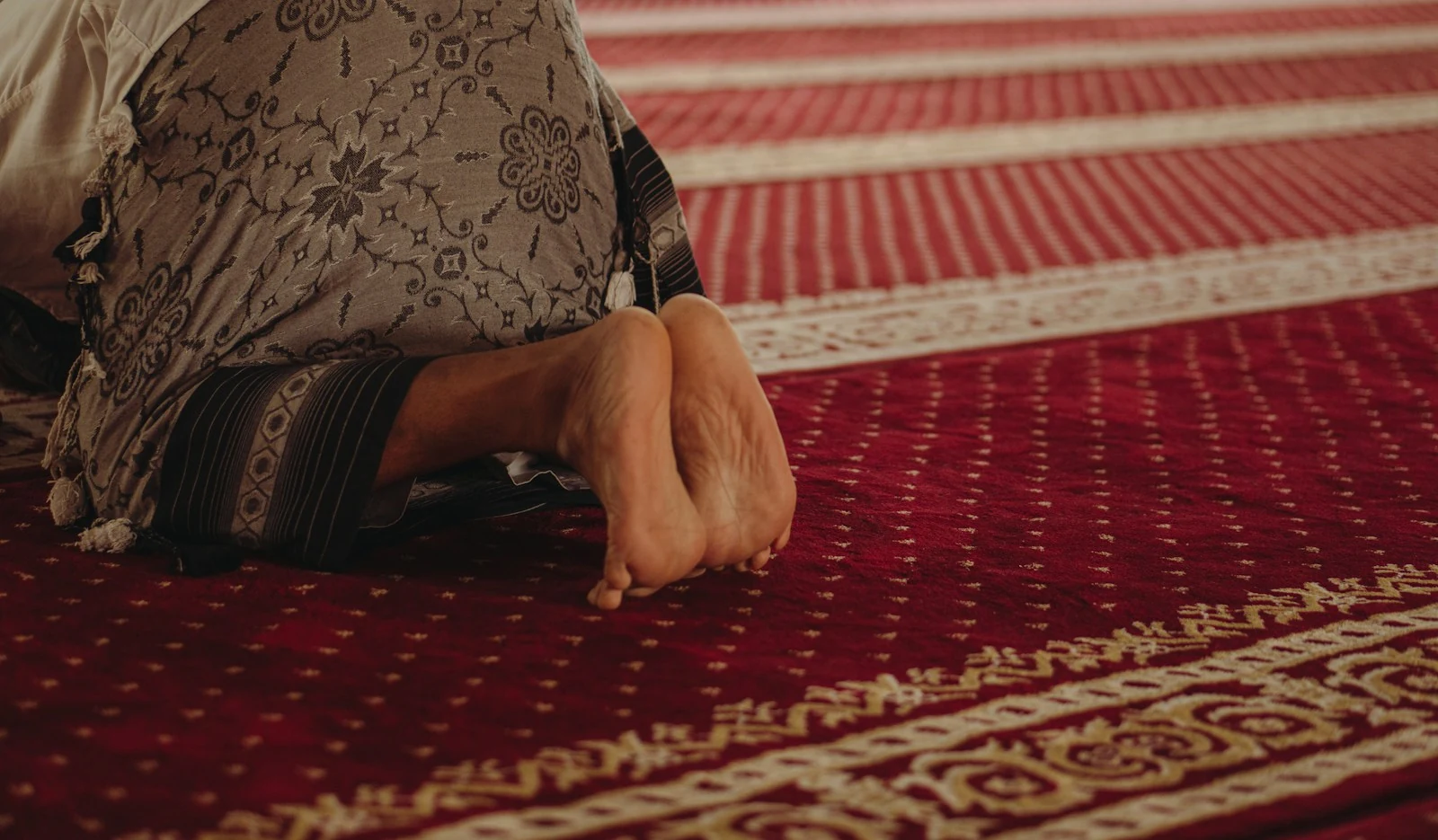
Ibn al-Qayyim, may Allah have mercy on him, said: “There are two kinds of migration. One is bodily migration from one country to another; its rulings are known and are not the subject of this discussion. The second is migration of the heart to Allah and His Messenger, which is what is intended here. This is the true, fundamental migration; bodily migration follows it. It is a migration involving a ‘from’ and a ‘to’: the heart migrates from loving others besides Allah to loving Him, from servitude to others to servitude to Him, from fearing, hoping in and relying upon others to fearing, hoping in and relying upon Allah, and from calling upon, asking, submitting, humbling and abasing oneself before others to doing so before one’s Lord. This is precisely what fleeing to Him means. Allah says: ‘So flee to Allah[16].’” End quote.
On one of those days of amusement and disobedience, I came home late to sleep. After I laid my head on the pillow, a thought reminded me of a friend’s advice to recite the master supplication for forgiveness every night before sleeping. I had forgotten that advice and do not know why it came to mind that day, the second of Sha‘ban. I began: “اللهم أنت ربي، لا إله إلا أنت، خلقتني وأنا عبدك، وأنا على عهدك ووعدك ما استطعت” There I stopped, repeating: “وأنا على عهدك ووعدك ما استطعت” I asked myself: Am I truthful in what I said? Am I really keeping Allah’s covenant and promise as far as I am able? Then I asked: What is my purpose in this life? What do I want if I live and grow older?
Years earlier, I had been a footballer, but the club had dismissed me because of an ear condition that made me fall if the ball struck my head. So I answered myself: How wonderful it would be to play again and become famous. But the thought did not let me enjoy this answer for long: What after you become famous? As my imagination circled around money, women and power, the thought kept returning: What then? What after you have everything you want? Again I repeated: “وأنا على عهدك ووعدك ما استطعت” With so many conflicting thoughts, I fell deeply asleep. I woke only to my mother’s hand—may Allah have mercy on her—moving over my head, and her voice whispering: “Get up, my dear. It is nearly eight. Get ready for work while I make your breakfast.”
My parents used to rise early for the dawn prayer. I asked my mother, “Why don’t you wake me to pray Fajr with you on time?” She smiled and said, “Just get up and pray, even after its time.” I reproached myself aloud: “Yes—why not?” I got up and performed ablution. Before I prayed, she said, “Hurry, so you can have breakfast before work.” I replied, “I don’t want breakfast. I will fast today.” I began praying while hearing her ask Allah to guide me. Afterwards she asked, “How will you fast when you did not make the intention?” But apparently I was a natural jurist: I told her, “We are in Sha‘ban. Fasting in it is good and acceptable in any case.” I felt overwhelming happiness, reflected on my mother’s face.
A traveller and migrant naturally needs provisions to sustain him on the way. The Qur’an commands us to carry these provisions and explains their reality: “And take provisions for the journey, but the best provision is righteousness.”
In my life afterwards, I came to feel the truth of Ibn al-Qayyim’s words quoted at the beginning, although I read them only years later. They remind me of those moments, none of which has faded from my memory. In tribute to the book in which he wrote them, I chose its title here: زاد المهاجر إلى ربه. Leaving disobedience and turning to obedience is migration, as the Prophet, peace and blessings be upon him, said: “a Muhājir (emigrant) is the one who abandons what Allah has forbidden.” Narrated by al-Bukhari. Although we live in a time of bodily migration because of the injustice and tyranny of our rulers, migration of the heart remains fundamental. Indeed, we migrate bodily to preserve our hearts; hence its name, migration for Allah’s sake. Bodily migration may occur once in a lifetime, but the servant needs migration of the heart time after time and cannot do without it until he meets his Lord.
A little later, Ibn al-Qayyim says: “Migration to Allah includes abandoning what He dislikes and doing what He loves and approves. Its basis is love and dislike, for whoever migrates from one thing to another must love the destination more than what he leaves, preferring the more beloved of the two. The servant’s soul, desire and devil call him to what opposes Allah’s love and approval. Tested by these three, which continually call him away from his Lord’s pleasure, while faith calls him toward it, he must migrate to Allah at every moment and remain in migration until death.” End quote.
A traveller and migrant needs provisions to sustain him along the way. The Qur’an commands us to carry them and explains their reality: “And take provisions for the journey, but the best provision is righteousness.” It even compares them to clothing that covers nakedness and protects the body from the sun’s harm and the pain of cold: “O children of Adam, We have given you garments that cover your private parts and as an adornment. However, the garment of piety – that is best.” Whoever has a heart empty of this provision, mindfulness of Allah, should know that he will inevitably fall in every trial that crosses his path. The Prophet, peace and blessings be upon him, warned of this outcome: “The trials are presented to the hearts, like a reed mat, stick by stick. Any heart that absorbs them, a black spot will be marked in it, and any heart that rejects them, a white spot will be marked in it, until the hearts become two: one white, like a smooth rock, untouched by any trial as long as the heavens and the earth remain, and the other black and discolored, like a jug, turned upside down, not acknowledging what is good nor rejecting what is evil, except for what it has absorbed of its desires.” Narrated by Muslim.
Our Lord, keep our hearts steadfast until we meet You with Your pleasure upon us.